Tractors
Trucks
- Find by Budget
- Find by Type

English
 New Delhi
Govt extends traction motor import till March 2026 for electric trucks and buses under PM E-Drive, easing production challenges and boosting EV growth with domestic manufacturing incentives.

By Robin Kumar Attri

Import period for traction motors extended until March 2026.
Domestic manufacturing for N2 trucks and buses is delayed by six months.
PM E-Drive scheme offers Rs. 10,900 crore incentives.
Electric buses get the largest allocation: Rs. 4,391 crore.
The government promotes domestic rare earth magnet production.
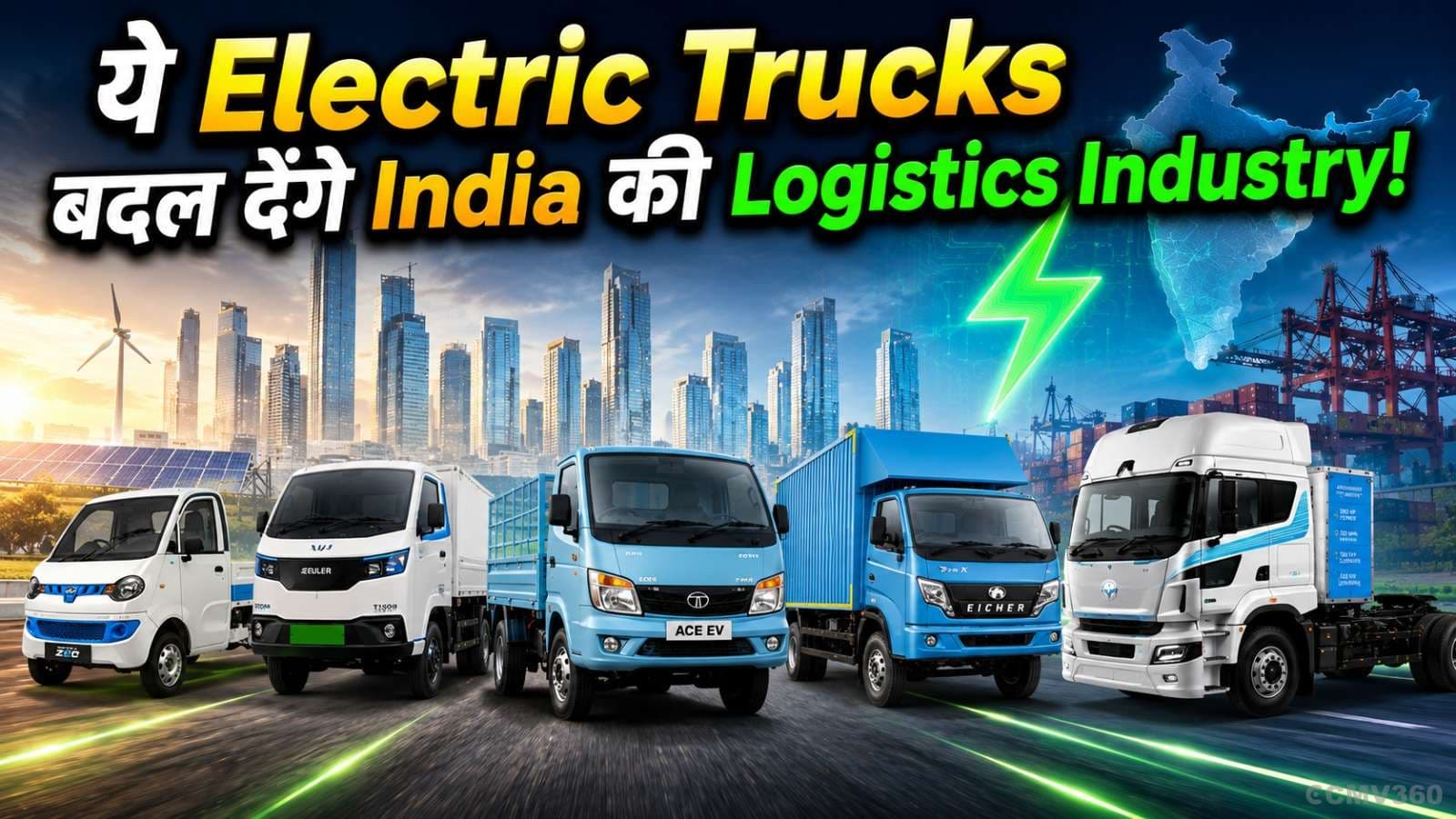
The government has announced relief for electric truck and bus manufacturers under the PM E-Drive scheme. To address supply challenges, the import period for traction motors containing magnets has been extended until March 2026. This will allow manufacturers to continue production without interruption while preparing for domestic manufacturing.
Earlier, the Phased Manufacturing Programme (PMP) required N2 electric trucks and buses to produce traction motors domestically from September 1, 2025. These motors include magnet fitment, rotor and stator assembly, shaft, bearings, enclosure, connectors, and cables.
The Ministry of Heavy Industries has now amended the rules:
Domestic motor production for N2 trucks starts March 1, 2026
Domestic motor production for electric buses starts March 3, 2026
This six-month extension addresses supply disruptions caused by the suspension of magnet exports from China.
Automakers were facing difficulties sourcing rare earth magnets, essential for traction motors. Many had to import complete motors or sub-assemblies from China to maintain production. The extension ensures that electric truck and bus production continues smoothly while allowing time to start domestic manufacturing.
The PM E-Drive scheme has a total allocation of Rs. 10,900 crore for electric vehicles, including two-wheelers, three-wheelers, trucks, and buses.
Electric trucks with a GVW above 3.5 tonnes are eligible for incentives at Rs. 5,000 per kWh of battery capacity or up to 10% of ex-factory price, whichever is lower.
N2 trucks can get a maximum incentive of Rs. 2.7 lakh, while trucks with 7.5–12 tonnes GVW can get up to Rs. 3.6 lakh. Subsidy requires scrapping an old vehicle with a Certificate of Deposit (CD).
Electric buses received Rs. 4,391 crore, supporting 14,028 buses for state transport units and public agencies. Subsidy is Rs. 10,000 per kWh with maximum limits of Rs. 35 lakh (10–12 m buses), Rs. 25 lakh (8–10 m), and Rs. 20 lakh (6–8 m).
The government is promoting domestic production of rare earth magnets to reduce dependence on imports. Subsidies will support local magnet manufacturing, boosting self-reliance and long-term growth in the EV industry.
Also Read: Tata Motors Tops CV Sales in September 2025; Mahindra and VECV Report Mixed Results
The six-month extension for importing traction motors ensures uninterrupted production of electric trucks and buses. Combined with PM E-Drive incentives, it supports domestic manufacturing, reduces reliance on imports, and strengthens India’s electric vehicle industry for sustainable growth. Manufacturers now have time to set up local motor production while meeting rising EV demand.

About the author
Robin Kumar Attri is a content and video professional with 2.7 years of experience in the commercial vehicle domain. At CMV360, he creates news articles and videos covering trucks, tractors, buses, three-wheelers, and infrastructure machines.


 Add CMV360 on Google